

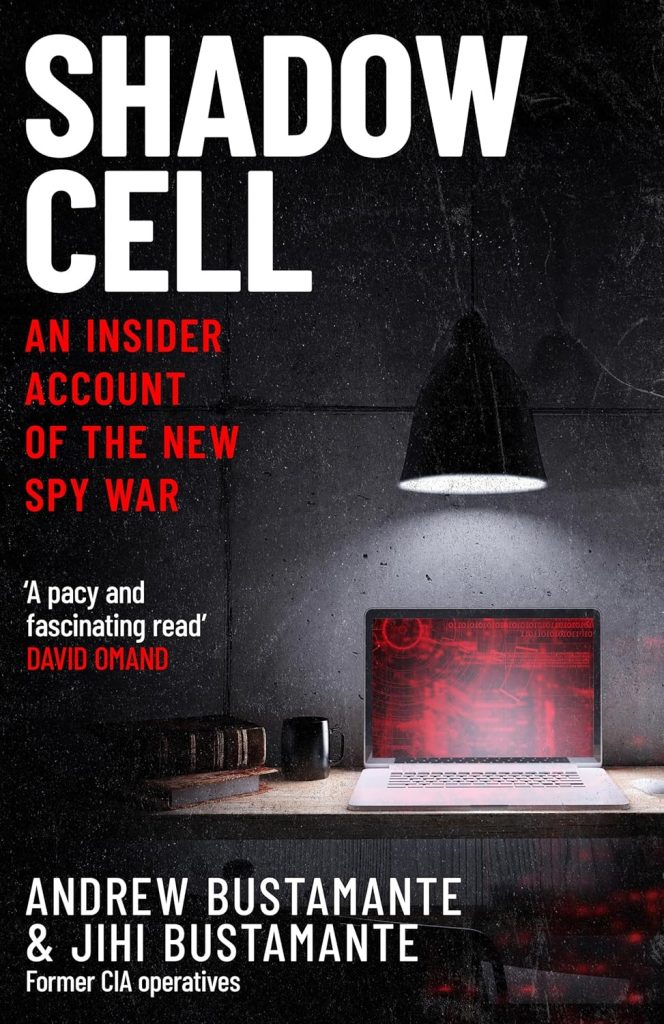
I’ve never really thought about the intelligence services prior to reading this book. Beyond popular culture, I’ve never really thought about or had much regard to the work of these agencies beyond just an awareness of them existing.
Shadow Cell by Andrew Bustamente & Jihi Bustamente gave a unique perspective on their work as well as the dangers that operatives put themselves in. The book was very informative and certainly riveting in some parts and it also made me think about some techniques I could use in the workplace.
I will give a summary of the book, what it gave me to think about in the workplace and also some of my personal experiences in dealing with security. Shadow Cell is a book I recommend reading which may in fact change how you think about your own interactions with people and the way that you use your ’Cell’ to meet objectives.
By the way if you haven’t read my review of Source Code by Bill Gates, you can read it here. Highly recommended if you enjoy Shadow Cell.
The background context and summary
In November 2014 the Washington Post published an article with the following statement (you can read the full article here):
CIA Director John Brennan is considering sweeping organizational changes that could include breaking up the separate spying and analysis divisions that have been in place for decades to create hybrid units focused on individual regions and threats to US security.
Bustamante, Andrew; Bustamante, Jihi. Shadow Cell: an explosive insider account of the world’s new spy war from ex-CIA operatives (p. 229). Headline. Kindle Edition.
This book gives an explanation of the circumstances and changes leading up to that decision by John Brennan in 2014, by which point Andy and Jihi had both left the CIA. You can imagine the long and painstaking review by the security services in the years that followed for this book to be released in 2025, over a decade later.
Historically agents in the security intel services would operate mostly in silos which had its faults such as more risks, inefficiency and wasted time. The Cell concept that was developed by Jihi against Falcon intelligence changed all that.
By the way, you can imagine that no countries were mentioned beyond America, and names other than the authors were changed/anonymised. Words like Falcon, Puma, Conserve – neutral words where you can’t associate characteristics like culture or nationality are used throughout the book to maintain a level of confidentiality – all signed off by the CIA.
The ‘Cell’
A Cell uses many team principles you might have already come across in the workplace or even your business studies. There are typical roles like the Targeter who gathers all the intelligence on a source/person to enable and give the Operative the tools and intelligence that enables them to make discreet contact in the country. Jihi was an exceptional targeter who used a method using Spider diagrams to collate information on the source such as their daily patterns.
There’s a 3 step method for gathering intelligence and making contact by the Operative. The key lesson here is not to draw any attention. That made me think; how many interactions have we had in our lives that have been really unmemorable? It may have been very possible that a few of these interactions have been with intelligence personnel without us even having any suspicions.
I travel frequently and it provoked a thought in my head about the numerous interactions I’ve had with strangers at Airport terminals just spontaneously. I do wonder if it was actually spontaneous or somehow ‘navigated’. Not that I had anything to hide so it doesn’t bother me but I do now wonder.
In dealing with the ramifications of a mole in the CIA and infiltrating Falcon Intelligence, this book gives an engrossing story of building a character and persona, training/the ‘farm’, surveillance techniques, spying, engaging in small conversations during first contact, espionage, and doing all you can to dissuade an arrest whilst being ‘normal’. One thing for sure, as soon as you step into any target country you are on your own and the CIA will deny any association.
Workplace spider diagrams
There was a valuable lesson from Jihi that I think would be really good to apply in any work that I do as well as in an interview preparation. This is by using the spider diagram.
One of the key objectives of a targeter is to not leave any loose threads. You want to create a web of intelligence that covers everything so you know daily patterns, habits, networks, associates etc.
In this digital age with social media, transaction cards and all forms of digital media this is now relatively easy and quick to do. The hard ones are where there is no pattern or they don’t use some of this media and tech thereby creating a persona of unpredictability. But in doing so draw attention.
I deleted all my social media about a decade ago, more out of not liking the habits it was imprinting on me and just wanting a bit more freedom. But having done so, I think I’d be a bit more attention drawing if ever I became a target.
With the spider diagram, at work have you got the full view of the organisation? Or are you (like me) just doing a job at the right standard expected of you? I think if I were to do a spider diagram, it would enable me to kind of work like an intelligence officer and make sure I have covered all grounds in terms of how an organisation works, who I need to speak to and what the key issues are. I think this may prove beneficial for promotions or even becoming a bit more influential.
I think doing this in an interview preparation would be quite handy. One tip I can give is never script your answers. But go through the job description and start constructing a spider diagram so you can go through every avenue to put yourself in the best position preparation wise.
Airport Security
I’m really glad Andy got out in the way he did. The experience through airport security was one part I’ve had direct experience with.
50% of the time when I am going through security or boarding I normally fall into what Andy explained in the book as secondary questioning. This is an interview by police officers that ask me about what I did on holiday, where I stayed and who I met/stayed with.
As a solo traveller that doesn’t always stick to the real tourist destinations, it can attract attention. The worst one was when I went on a day trip to Barcelona and on return to the UK, the e-gates read “Please seek assistance”. This was followed by being taken into a room with a somewhat aggressive border control officer asking me repeatedly why I went and what I did. I wanted to visit a beach and it just so happens that Barcelona beach is easier for me to get to than a UK beach given where I am.
It’s not something I will ever do again. I mean I enjoyed going but it caused a lot of inconvenience. I was never worried/panicked at any point. I had done nothing wrong and I knew that. But the scrutiny it raised just wasn’t worth it. Fundamentally this ties in with a key message from the book: be boring.
Well Recommended
This was an intriguing read. The chapter on Andy’s escape/departure from Falcon was high octane and despite taking 1.5 hours to read, I read from start to finish, I could not put it down.
Really informative and fantastic book on the work of our security services.
I’m not sure how I feel towards them after reading this book as it was a bit bittersweet. I’m glad Andy and Jihi left as they did and managed/were given permission to share their stories. But at the same time the way that they were treated on exit was horrible.
So if anything after you read this book, give some pressure to your local MP and write a letter to advocate for better care and regard to our service personnel. This may be through higher salaries and benefits.
I/We will never know their names. They operate in the shadows. Great book, and thank you Andy/Jihi.