

Have you ever struggled to keep a conversation going? Or are you an “introvert” that really avoids social interactions because you’ve historically failed and struggled to develop meaningful relationships? I hit the mark on both of these two points. Vanessa Van Edwards is a renowned influencer and Youtuber who has described herself as a professionally awkward person. In this book she gives 14 hacks and valuable advice on how to make fantastic first impressions, hook people into conversations and create meaningful relationships.
Communication is a skill. And just like any other skills, it can be taught, learnt, applied and practiced. However, it is one of the few skills that we are actually never taught in our primary years beyond subjects like English, Maths and Science. Don’t get me wrong, these are so important.
Communication generally has a higher weighting in terms of a person’s quality of life throughout their life expectancy so it’s something I came away from the book, thinking why the hell are we not teaching these skills to kids? Or maybe they are and I just missed it!
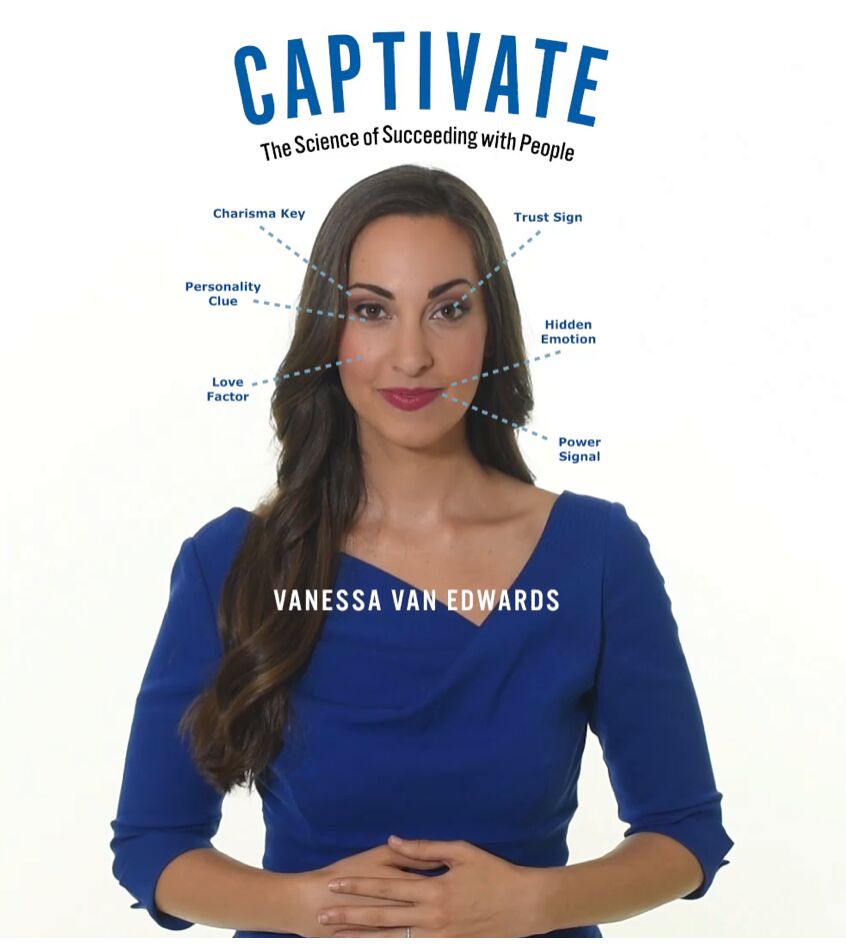
The book is split into 3 parts: how to make a killer first impression in the first five minutes, the next 5 hours, and the next five days. This is a really practical book with exercises, challenges and key takeaways at the end of every chapter.
Some memorable parts which stuck out for me include: Reading people and microexpressions, Thread Theory, the skill in Storytelling, finding conversation sparks, and the power of just listening. The tips in the book were really powerful and I reviewed personal experiences like Holidays and quite a few interviews, both as an interviewer and interviewee. These are some of my tips and learnings but I highly encourage you to buy and read this incredible book by Vanessa!
If you decide to read the book, using the Amazon link above helps support the blog at no additional cost. Thank you!
Killer First Impressions
With a first impression, you are a Triple Threat when you use your hands, your posture, and your eye contact. These are the three nonverbal weapons you can use to pass through all three levels of trust.
Edwards, Vanessa Van . Captivate: The Science of Succeeding with People (Portfolio Non Fiction) (p. 40). Penguin Books Ltd. Kindle Edition.
Have you had one of those boring small talk conversations: “Hi, how are you? My name’s…”, “Hi my name’s Vanessa, where are you from?”, “I’m from..”. This keeps going for 5 minutes and you can just feel it dying out and you’re struggling to ask the questions to keep it going. Captivate gives simple methods for showing confidence, showing trust in the person you’re communicating with, and showing you’re a winner. Moving from this usual small talk to asking better thoughtful, open questions to keep a conversation going I think was a key skill in this book which everyone should know!
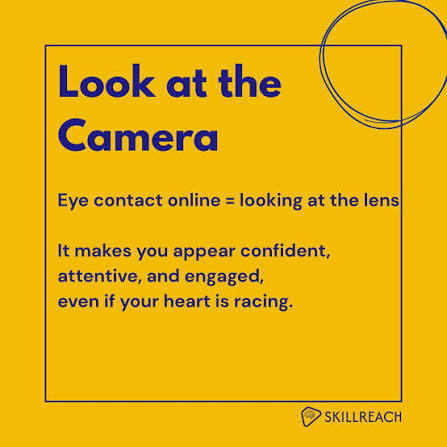
If you’re in interviews in an online meeting some of this might be a little difficult like showing your hands and making eye contact. I’ve experienced candidates that I understand and can tell that they’re looking at me on the screen but the problem with this is that the eyes never connect to the camera in front of them. So there’s no direct connection between what I’m seeing and their eyes. This isn’t a huge problem, but I’ve found as an interviewer that if I can see people looking at me with their eyes, it just helps to create some form of a connection. So one tip for online interviews meetings – look at your camera above the screen from time to time rather than constantly at the display.
Microexpressions
Microexpressions and being able to read people are a massive part of communication which I think everyone should have a basic understanding of – especially if you’re interviewing! Contempt, sadness, disappointment, boredom – are all microexpressions that we should be familiar with as they help us to respond and communicate more engagingly. I’ve personally had a number of job interviews over the last few months and in 90% of them, I felt that the interview and the answers I gave generally were good or good enough. There was nothing immediate that told me hold on this wasn’t the right answer.
Now if I review the microexpressions the interviewers showed me at points, it gets a bit more clear and on reflection these were subtle hints I wasn’t giving the right answers. Vanessa’s book gives you diagrams and practice exercises so that you can learn how to effectively read people so you can use this to manage and maintain a captivating verbal conversation. I find this really helpful which I’m still practicing and learning from.
There’s a reason why Simon Cowell is one of the world’s most successful TV stars. His expressions as a judging panel and in interviews captivate audiences around the world and keep them hooked onto his shows. He is a fantastic communicator and the best examples in giving microexpressions;
 |  |  |  |
Thread Theory
The Thread Theory is an incredibly easy way to both open conversations and never run out of things to say.
Edwards, Vanessa Van . Captivate: The Science of Succeeding with People (Portfolio Non Fiction) (p. 92). Penguin Books Ltd. Kindle Edition.
How do you keep a conversation going? This is the skill in Storytelling and understanding Thread Theory. We all have stories to tell and we love telling stories. In doing so there are often threads which are woven together in a mishmash which can overlap our own threads. Asking the right questions and making the right comments to try and weave through this thread and see where it overlaps into yours and what topics you connect on is a great skill in keeping a conversation going.
I have had a few conversations and dates to be honest where I just didn’t feel that, I didn’t feel we had any common interests to talk about. What I didn’t appreciate properly at the time was that you need to keep asking the right open ended follow up questions to dig deeper into a person’s story and thought process.
In doing so you will 100% discover a topic that you can share your own experiences or thoughts with and build conversations from there. This is a skill and it does take some practice but conversations aren’t always dead, you just need to ask the right questions which incentivise the other person to go a little deeper and talk around the topic.
Interview Tip: Converse!
STAR – Situation, Task, Action, Result. You’ve heard this for interviewing right? Why is it so useful? It’s immensely powerful in telling a story. This is what is going to engage the interviewer’s attention. There is another method you could use more in personal conversations than an interview but I think it’s still worth learning from and applying it where you can. That’s by using a trigger, a hook, explaining the struggle and then where possible using a boomerang back to the other person.
The STAR technique is great for interviews but what I have experienced previously with candidates for jobs is that they have pushed this so hard, they are no longer having a conversation. I’ve spoken to a few graduate candidates where it really feels like they’ve just memorised a script that they are now reading. You need to have a conversation with people in interviews.
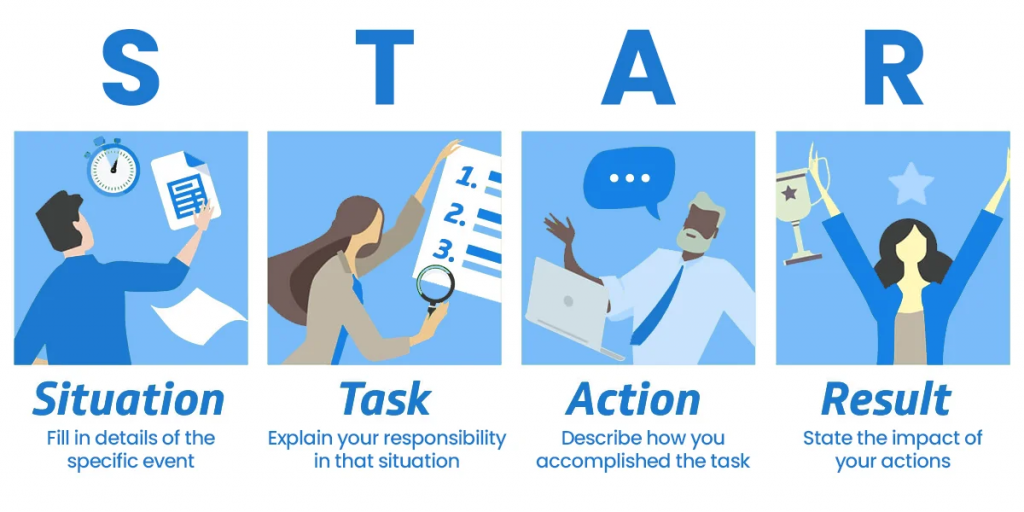
Using the STAR technique is brilliant as it helps you structure what to say but don’t let it tell you what to say. For a job I interviewed two candidates where one gave me an example as a reservist in the army doing a training exercise and another working as a student rep trying to manage an event. The latter had a brilliant example but I just felt they were reading a script that they weren’t really communicating with me. It felt a little rehearsed.
The former however, I could tell straight away that they had not anticipated my question and never had an example in mind. Despite that she still used the STAR technique to give a brilliant answer. It had nothing whatsoever to do with working in an office but her story was so captivating and unusual for an interview.
Style of communication is much more important in interviews than the content of what you actually say.
Conversation Sparks
Finding conversation sparks has always been something I’ve struggled with personally. A conversation spark is a topic which ignites a sort of fire or interest/curiosity from other people which maintains their interest.
If you want to have dazzling conversations, it’s up to you to create sparks. You can remember someone’s name, use conversation sparkers, or push hot buttons to create talking high points. Get out of your own conversational autopilot. Don’t use social scripts, ignite conversational sparks. Stop passively listening and push hot buttons. Hack conversations by creating talking high points. Be more memorable by really remembering the people you meet—from their names to their interests. Ending small talk starts big connections.
Edwards, Vanessa Van . Captivate: The Science of Succeeding with People (Portfolio Non Fiction) (p. 70). Penguin Books Ltd. Kindle Edition.
The Power of Listening
One memorable part of the book that Vanessa shared was about her week-long vow of silence, where she wouldn’t say one word to anyone but just listen. Interestingly this week she had some of the most memorable conversations despite not saying a word.
People like to speak and they like to be listened to. Asking the right questions and for the most part just listening is a key skill that I think a lot of people overlook. This was certainly the case with Alfred P. Sloan at the Ford Motor company who by listening turned a 12% market share to 52% in 1956 from 1920.
It may surprise you to know,” he said at the time, “that I have personally visited, with many of my associates, practically every city in the United States, from the Atlantic to the Pacific and from Canada to Mexico. On these trips I visit from 5 to 10 dealers a day. I meet them in their own places of business, talk with them across their own desks and solicit from them suggestions and criticisms as to their relations with the corporation.”
Edwards, Vanessa Van . Captivate: The Science of Succeeding with People (Portfolio Non Fiction) (p. 75). Penguin Books Ltd. Kindle Edition.
Your Tribe
One final part which I really connected with is with Knowing Your Tribe. This isn’t to exclude anyone but it is to play to your strengths and find people you may have a lot more in common with. I love reading, travelling and beach holidays where I’m half naked (okay I was fully nude once but that’s another story!). Some of the best friends that I have were from these situations.
We still speak despite living in different countries from these shared experiences where you know what, I never struggled keeping a conversation going. I know my Tribe and I know how I can play to my strengths to elicit captivating conversations.
A key message is to play to your strengths rather than your weaknesses to create lasting friendships.
This book is highly recommended! The 14 hacks teach you the skills you need to evoke engaging conversations with complete strangers and build meaningful relationships that last. I’ve started taking regular walks in the park and using these hacks have started some happy conversations with strangers. I loved this book, very easy to read, funny and very practical too! Thank you Vanessa!
Another Digress..
If you’ve read my post for That Will Never Work by Marc Randolph you may have seen at the very end I showcased a small game I’d been working on. Thank you for all your feedback and comments! I hope you’re enjoying the game! I’ve been working on another one since that post which you can try below 🙂
I would once again welcome any comments you could give me! Please keep sharing this blog and if you can any support would be appreciated! Have fun!!
[…] sure to check out my review of Captivate by Vanessa Van Edwards! Great addition to this book where you can learn and master the hacks for brilliant […]