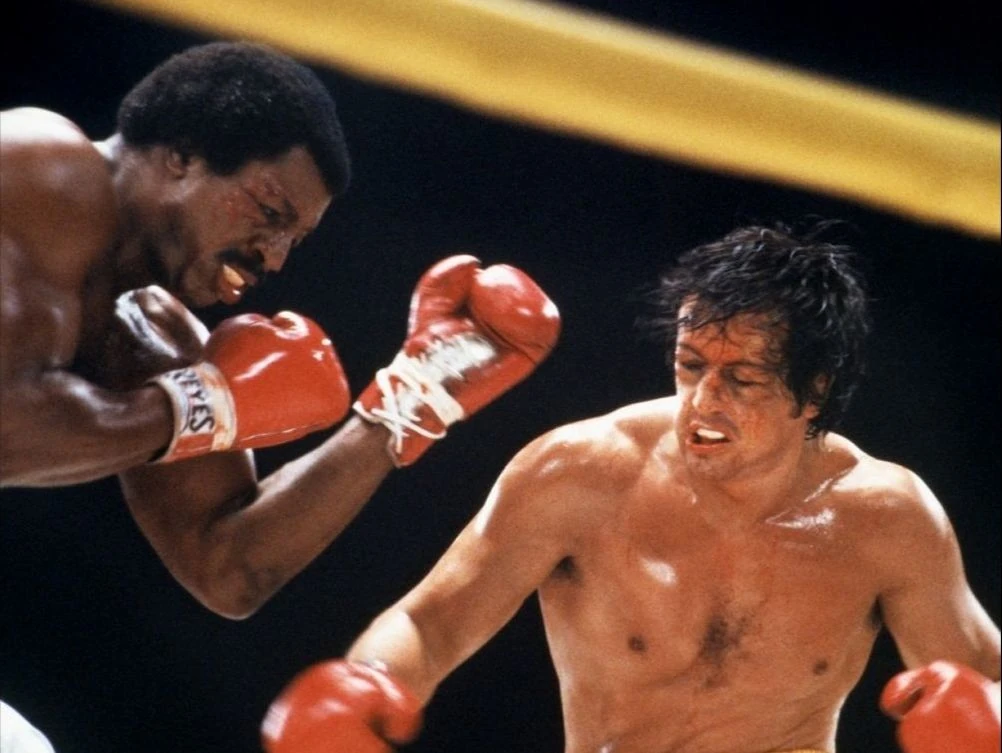
Can you remember the first Rocky movie? What did that final fight with Apollo Creed mean to you?
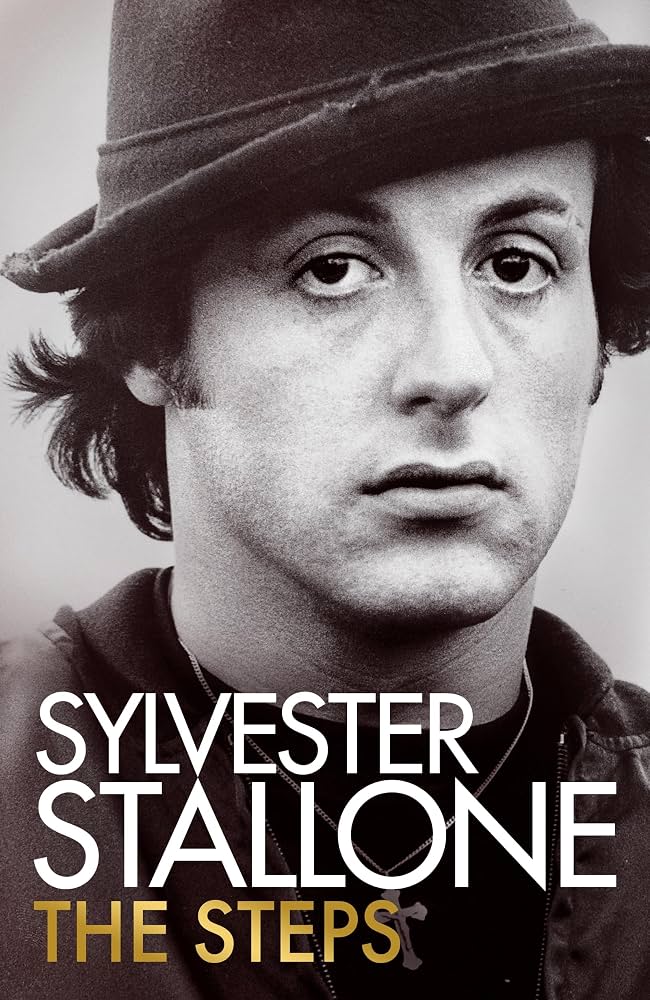
It’s been 50 years since the first Rocky movie which was an independent film that won 3 Academy Awards, but after reading The Steps by Sylvester Stallone – I had to rewatch the movie. It took a whole different meaning knowing the dealings behind the scenes, the no’s and the rejections that Sly went through, Sasha’s unwavering belief in Sly, and the perseverance and resilience to create an artwork that consistently had doors pulled shut in front of him. I actually think the movie should have been marked with “Inspired by true events” because it kind of was. The artistic vision of the film and its cast connected audiences to a love story in a way that had rarely been achieved before.
What I loved about The Steps was how relatable it was. Not that I went through the exact same things as Sly but I can relate to the feelings and some of the struggles. In fact I think many readers will too. That’s why Rocky was so successful, because Sly wasn’t creating another boxing movie. He wanted to create a story of how each of us are striving for something better. This was achieved beautifully and it still has relevance today and still resonates – even with me in 2026.
“Rejection is your shadow”
Rejection is your shadow at every step in this business. You have to find a way to make peace with it. Going through this open audition process was a very quick education.
Stallone, Sylvester. The Steps: The powerful new memoir from the Academy Award-winning actor and icon (p. 39). Orion. Kindle Edition.
Auditioning for casting is similar to job interviews. Actually it’s exactly the same to be honest, it’s just the metrics are different. I’ve done circa 30 job interviews so far this year with no success. More than 60% of the time I never hear back and 20% of the time, another candidate was ‘just’ chosen and the remaining 20% was due to fair but really fine margins.
In casting sometimes the outside perception of you is really different to how you see yourself. Sly was being pushed more towards thug type roles by agencies than any leading character which went against his better judgement and vision. Sly was also born with a bit of a slur due to the methods used during his birth. This caused a bit of a disability which was negatively viewed upon by producers and agents.
Similarly to Arnold Schwarzenegger, these perceived weaknesses were turned into strengths with now a memorable tone, voice and lines for the Rocky character that got a standing ovation and applause at the second test screening!
I reflected on this when reading through The Steps and I can kind of relate. I don’t want to sound like I’m making bs excuses why I didn’t get a job but it does really fill you with anxiety when the interviews went well, you answered the questions well, the general immediate feedback was good but for whatever reason they went with someone else without even giving anything back. I got to a point in my career where I saw myself and believed that I had a manager level set of credentials. But getting rejected at every turn just made me question whether there was something I wasn’t seeing about how I was presenting myself.
Stop smelling farts
I recently came to a point in my life where it dawned on me that I wasn’t really making progress with my career. I think corporate finance careers are very similar to Hollywood. In Hollywood you’ve got a bit of a time limit to make a name for yourself. It’s quite difficult landing lead roles 30+, there’s always that glass ceiling.
I think in Finance, it’s very similar. By the way I’m not speaking this on anyone else, this is just my take. I think if you’ve reached 35-40 and you’re still being pushed forwards for roles you did at graduation – analyst-type roles, it became a point for me to reflect on am I really getting the most value out of this career that I’d been working on?
It gets to a point where you start consistently interviewing with interviewers half a generation younger than you – not that there’s anything wrong with that – but you question have I made the right choices or is it time to take ownership and stop being a passenger?
Sylvester was 29 ¾ years old. A job at the Baronet Theatre was a better education than college in the US in 1974-76 for an ambitious actor. In between the shows and being an usher he would study the movies and take notes. He studied why some actors and characters worked and why others didn’t. He studied the reactions from the audiences. This level of ownership over his own learning and education continued through his Hollywood career.
He started to write short manuscripts – it became quite clear in the book he was an artist. He was a literary artist and reader that was self-developed, and also a gifted actor because he understood the mind of the audience as well as the souls of the characters within the storyline.
The character of John Rambo was originally the complete opposite of what you see now. Originally it was a loudmouth, smiling, confident, slavish cliche-type war soldier in the 70’s. It was directly due to Sly that you see the character as a traumatized and scarred war veteran that hated war but could bring the heavens down.
This was against the shouts of the production team. Sly had a unique ability to manage these studios and their hesitance to try something new. It was always ‘let’s just try it and see’. More often than not it was better and the audience loved it.
We showed it to the producers. When they saw what we were trying to do, they gave up on the idea of hiring a “professional” fight choreographer and I got the job.
Stallone, Sylvester. The Steps: The powerful new memoir from the Academy Award-winning actor and icon (p. 242). Orion. Kindle Edition.
Sly was always trying something new with Cinema at the time. I think it may somewhat have been due to him being self-educated in the industry rather than having gone through the same course-book as everyone else. Perhaps. I think what it does teach us however is that if you get to a point in life where you kind of feel a bit stagnant maybe it’s time to do something a little different, make your own mark and drive your own cab.
Don’t be a passenger, drive your own cab!
“Hey, life is like a taxi! You either sit in the back like a passenger or you’re in the front driving where you want to go, kid!” “Okay.” “Okay, what?” It took a second, but his words sunk in. Drive your own cab! Don’t be a “passenger.” Drive in the direction you want to go, not the direction life is pulling you. In other words, chart my own course, like he felt he was unable to.
Stallone, Sylvester. The Steps: The powerful new memoir from the Academy Award-winning actor and icon (p. 170). Orion. Kindle Edition.
I’m currently in the process of scaling a business. I want to get to a place where I can have real ownership over my own future without being totally reliant exclusively on paid employment. As nervous and uncertain as it was, I worked hard to conduct the valuation, due diligence, risk analysis, legalities and really took ownership in the aim that I’ll be able to set my own course and make my mark.
It got to this point for Sly – now or never. He would stand on his hands to straighten them out when he got cramps after hours on end writing. A lot of his life experience came through metaphorically in the first script including things he’d learnt over his love of paintings and the premise that you don’t need to have a direct lived experience of something to create great Art. The ability to understand another experience and live your emotions through will give you the tools you need to change and shift the perception of others. This is what he eventually did with the Rocky storyline. It was a character a lot of us could relate to given Rocky’s struggle and promise.
The first script needed a rewrite following feedback from Sasha. Sly wrote it in the ‘expected’ thug way that didn’t really touch with people. A lesson about feedback is to always take it constructively and that’s exactly what Sly did with the second script, dropping Sasha to her knees with ‘I love it!’
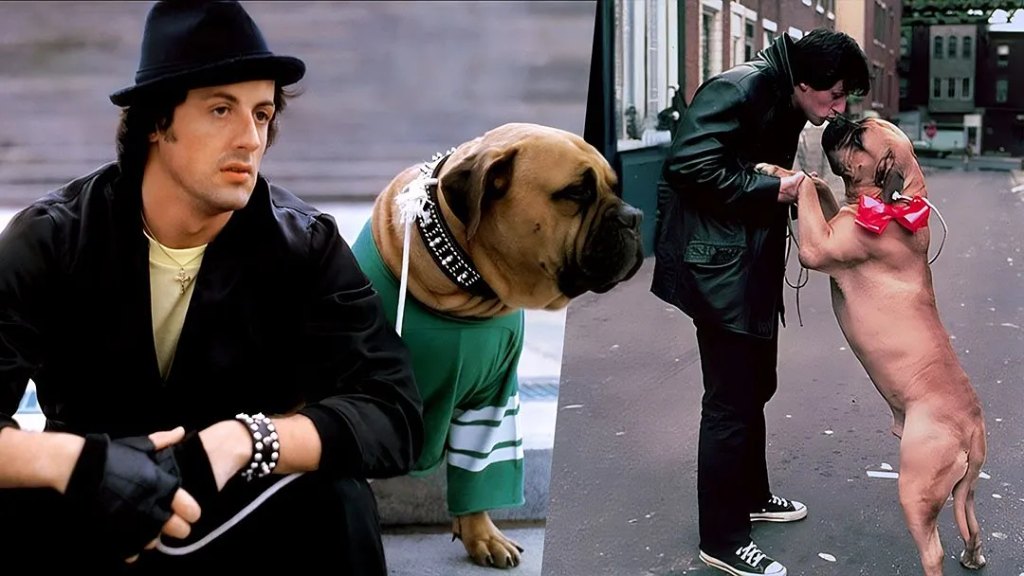
One objective was to play the lead character, not to sell the screenplay. The offers kept rolling in though from $20,000 to $300K+ – about $2.5m today! This was despite a point where he only had $104 in his bank and sold Butkus – his beloved Bullmastiff – who starred in Rocky, for $40. He bought him back after he got the Rocky character…for $1350. “Best deal ever” in Sylvester’s words which I 100% agree with, the love of a dog isn’t something you can price.
Regrets
I really sympathized with the tumultuous relationship that Sly had with both of his parents. I never had the same relationships with my parents. Yeah there were some things but not too bad. What I came to understand and appreciate is that despite how bad things may be at whatever stage, you don’t want to carry them until you’re 80 (Sylvester’s age in 2026) and acknowledge a mountain of regrets. Regrets will get more and more as you grow older, that’s inevitable.
With parents, it is one door however that once it’s closed, you’re never going to get it back. As a person that has lost one parent, the times when I remember and think about my father I think have gotten a lot more frequent as I’ve gotten older. I need to be careful how personal I get here but all I want to say is that sure things could’ve been different. But just take the cards how they’ve been dealt. Losing with the best hand that you’ve managed to play is always going to be less regretful than folding at the first hand. Forgive, don’t forget no. Just don’t make a mountain full of theirs or your regrets.
This has been a longer book review that I initially planned. I think in writing this review, it felt like I was writing in a journal at the same time. This was a fantastic memoir with so many life lessons about struggle, hard work, creativity, resilience, love and gratitude.
I end this review in a bit of a bittersweet way. I’m incredibly grateful to have been born in an era where I can appreciate these greats like Sylvester Stallone, Arnold Schwarzenegger and Bruce Willis. We can all learn from their valuable life journeys and I hope we can create new ones learning from the best. Stallone is definitely one of the best. He wasn’t born into any form of luck or wealth. Building himself from the benches in Philadelphia to Hollywood stardom is something we see rarely in generations.
Rocky wasn’t really about boxing.
It was about refusing to quit.
Thank you, Sylvester.