

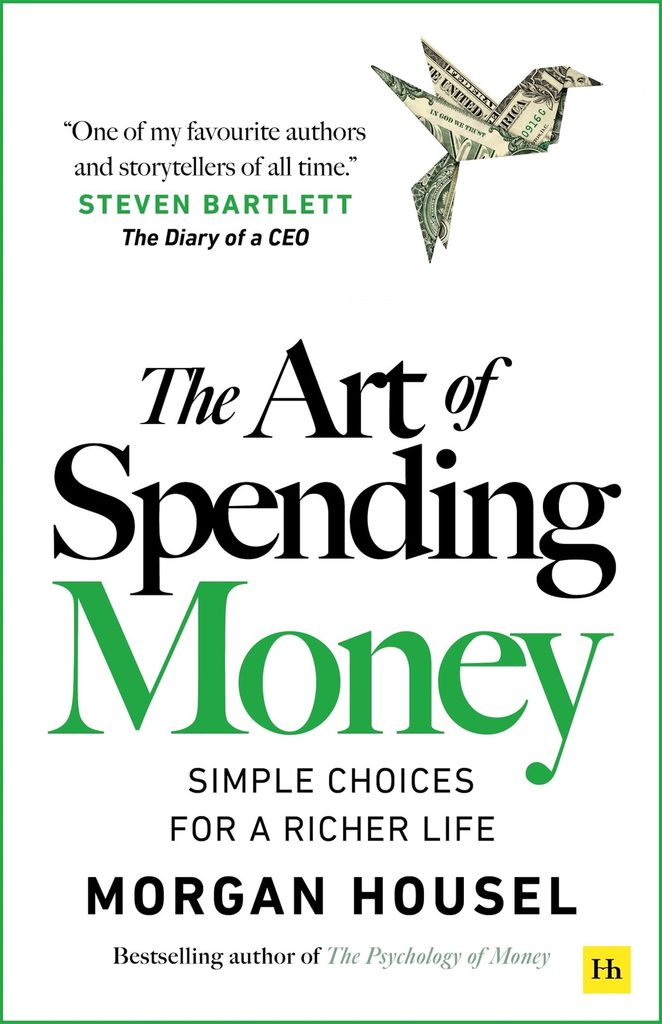
If I could go back and tell my younger self one thing about money, it wouldn’t be how to earn more of it. I’d wished I’d grown up with a mindset of money that I feel I have now much later in life than when I did in all the years, grinding for jobs, the mental drain of where I was in my social peer group and how I saw myself fitting in.
The Art of Spending Money is a must read book for everyone whatever stage they are at in life. It’s not a business book, but a book on personal growth, development and ultimately happiness and leading a simpler life.
I predict that a lot of the chapters and discussion points in this book will be something that everyone can relate to and have seen or experienced in their own life. Some people will relate to more parts than others.
For me, what I loved about this book was how I could relate to about 95% of the book – even the chapter on kids – despite not being a father. I have small nephews who I hope I will pass on some wisdom about how they should think about money.
I tell my kids that true success is when the people who you want to love you do love you. And that love comes overwhelmingly from how you treat people, rather than what you spend or a level of net worth. The most important financial advice I can give to my kids is that money alone won’t provide the thing that they and almost everyone want most in life. No amount of money can compensate for a lack of character, honesty, and genuine empathy toward others.
Housel, Morgan. The Art of Spending Money: Simple Choices for a Richer Life (p. 166). Pan Macmillan. Kindle Edition.
There were a few important life lessons I took away from this book which I already kind of knew, but it was incredible to read a precise confirmation of. The first is that people don’t really want money, they want status and attention. Believe me I 100% know of individuals like this in my life. I will not name or shame anyone I promise.
Status and Attention, not money
In his book Status Anxiety, Alain de Botton writes that “the predominant impulse behind our desire to rise in the social hierarchy may be rooted not so much in the material goods we can accrue or the power we can wield as in the amount of love we stand to receive as a consequence of high status.”
Housel, Morgan. The Art of Spending Money: Simple Choices for a Richer Life (p. 27). Pan Macmillan. Kindle Edition.
You may know someone in your life that is a bit extravagant with money. They like being flashy and showcase their car or cars and big house that has been meticulously decorated like Grand Designs. If not there are numerous celebrities and influencers who meet this criteria. There’s always the odd chance that you could, if you wanted to, write out a bigger cheque than these people.
Money is a means to an end. People mostly want a higher status and the attention that that gets. Money is the easiest way to that objective but it is very often short lived.
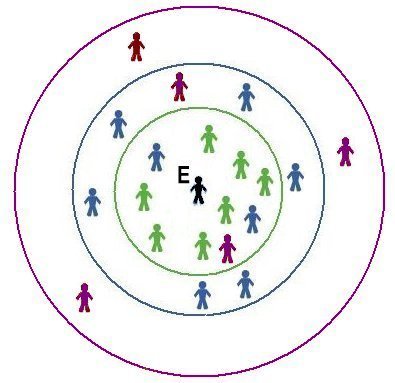
Morgan Housel describes the concept of social rings. If you imagine a set of rings with one inside another, this describes how for most people when they look into an inside ring from the outside, it looks really attractive and really elite/prestigious. Once inside however, there is another ring. That now looks more attractive and it becomes the next destination and so on.
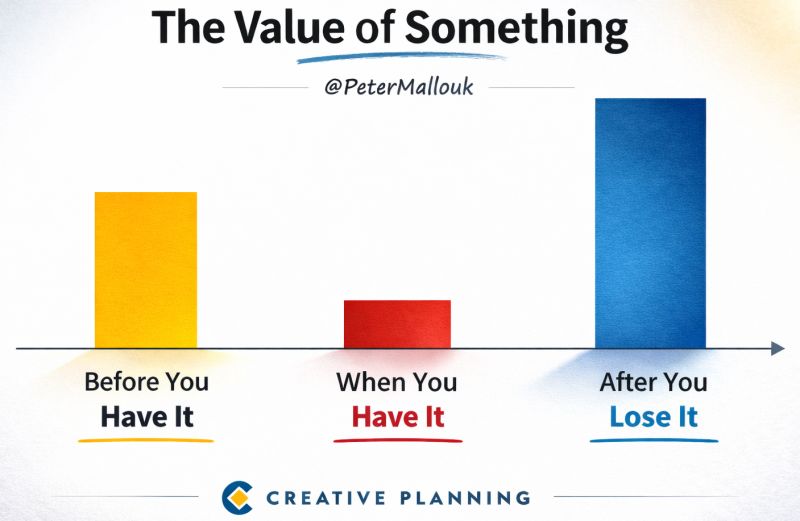
People often value something that they don’t have more than when they do have it or when they lose it. Do you recognise this yourself personally? I do or I guess I did. As life evolves, situations change and circumstances change, having an internal locus of control more than external helps to break this cycle. It’s a part of what has made Warren Buffet the world’s greatest investor.
Warren Buffett once said: “The big question about how people behave is whether they’ve got an Inner Scorecard or an Outer Scorecard. It helps if you can be satisfied with an Inner Scorecard.”
Housel, Morgan. The Art of Spending Money: Simple Choices for a Richer Life (p. 65). Pan Macmillan. Kindle Edition.
Buying Independance
Buying independence – true independence – is one of the best expenditures you can incur in your working life. Whether that be through savings, pensions or something the book didn’t talk about – buying a home. This will be a big part of my review and I’ll go into it a bit further, so keep reading! And the final lesson for me is to enjoy the little things in life and try new things all the time. This goes on to give a helpful piece of advice on reading which I hope many of you will follow!
Whatever you do with money – whether you buy material things or you save, you are spending and buying something. This is either material things or you are buying independence through saving in some way. The book lists 14 levels of independence which goes from doing a job you hate or find meaningless just so you can survive and put some money on the table. This goes on to being in a position where money no longer controls your decision making, what you aim for, or the sacrifices you feel comfortable making.
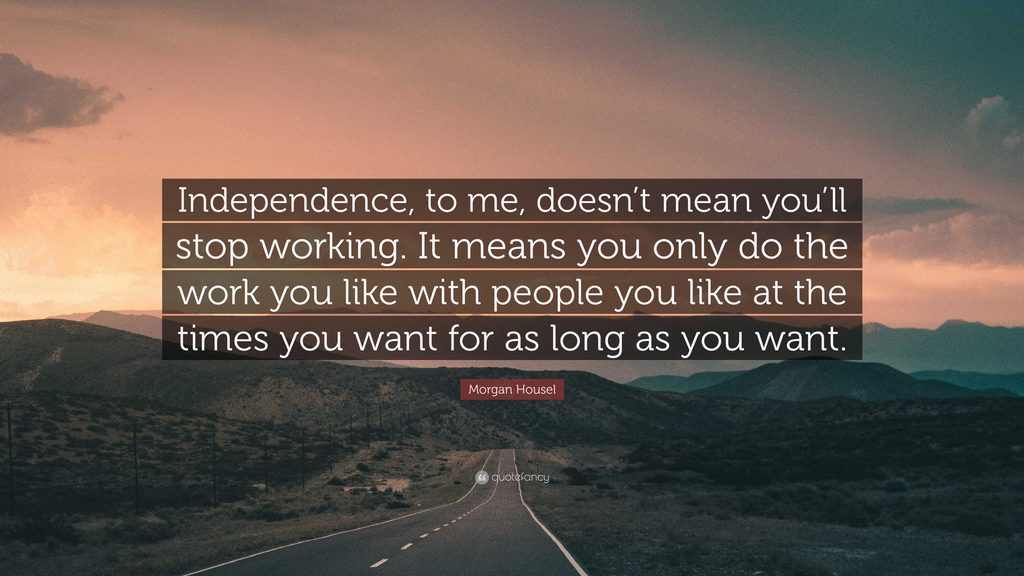
Someone on minimum wage may have little or a minimal say in their current life and what they can really enjoy beyond the food they buy, or the utilities they need to pay and the rent. For them their money and what they spend it on falls into the lower tier of Maslow’s hierarchy of needs. It’s just survival and money has a hold over you in a way that the choices you make are really tied to the outcome it can derive for you more than enjoyment, happiness and fulfillment.
Something a lot of us will be familiar with in some capacity is delayed gratification. We might save into pensions or into a savings account. This is a form of delayed gratification and buying independence. It does worry me that in the UK specifically, saving in a pension especially amongst younger, predominantly minority groups, is not given as much consideration/thought as I really think it should be.
The book didn’t talk about this but I just want to mention and point out a few things about pension saving which I hope readers will find valuable. By the way I just need to state that none of this is financial advice and please seek your own professional advice for any investment/financial decision.
Pension contributions worldwide are one of the best savings mechanisms. If you have pensions in the UK or a 401K in the USA, any contributions are normally made tax free.
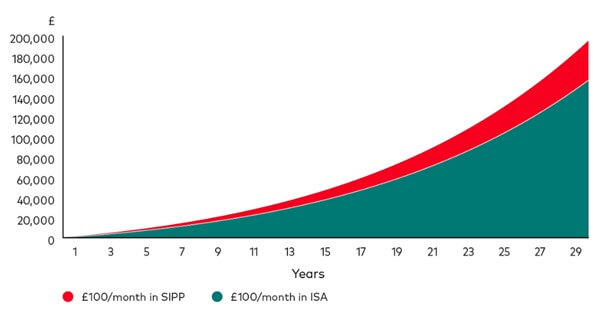
In the UK the basic rate tax is 20%. If I was to pay say £100 in an ISA vs a private pension, these are the basic maths. In an ISA, it’s a straight £100 into the account after tax has been deducted from your wages. Nothing is added by the government or taken off then.
If I were to contribute that same money to the pension, the government would add back 25% – the income tax that has already been deducted from your salary.
This is a form of delayed gratification. That money will grow and hopefully when you come to retire will provide a more meaningful impact on your happiness.
Mortgages
I’ve listened to a lot of podcasts recently where many guests have taken the view that renting is better and more financially favourable than paying a mortgage. There are pros and cons and as with any personal finance – ‘it depends..’.
A mortgage can be thought of as buying future independence. Paying rent can buy you a little more independence now as you won’t be beholden to a debt which means if you wanted, you could do another Europe trip combined with a safari in Africa if you wanted to. More than say if you still had a mortgage to pay.
If you have a mortgage however, it gets a little more difficult. You know that this debt needs to be paid regularly with interest and this has probably a more mental lock on you in terms of what you can actually spend your money on during the mortgage term.
However, once the mortgage is paid off, you will probably have a lot more independence than say if you were still paying rent. So a mortgage is a form of delayed gratification in simple terms – but it really depends. This is simply how I’ve interpreted Morgan’s ideas and not financial advice.
I think when a lot of people say that paying rent is financially better, they are valuing the current independence more highly than the future. This is fine by the way but it doesn’t take into account the lifetime of the individual and it doesn’t make the point as clearly in my opinion. There are other factors like capital gains, interest costs, ancillary costs etc which I won’t go into here but these are all still relevant so again do your own research.
The little things that add up
A major theme of the book is how the little things – good and bad – add up and compound to have a bigger impact. This applies for businesses as well as personal lives.
Former President Calvin Coolidge was notoriously frugal. Taking command over a federal budget that spent $21 billion during this term, Coolidge’s team once sent a card to every clerk at the Department of Agriculture that read: Government Correspondence Costs 26¢ per letter. Help Reduce the Cost. Write Fewer Letters. Write Briefer Letters.
…
Do you find this absurd? Well, consider that the federal government employed roughly 585,000 people in 1925. If each wrote five letters per day—remember, this was before email and was just the early days of widespread telephone use—a $0.26 letter cost the government more than $197 million per year.
Housel, Morgan. The Art of Spending Money: Simple Choices for a Richer Life (p. 173 – 174). Pan Macmillan. Kindle Edition.
There have been some renowned wall street team meetings which had 40 minutes allocated to the cost of disposable coffee cups in the office with only 10 minutes for a $67 million capex spend. The small things do add up, yes. But get things into perspective at the same time.
Warren Buffett was so obsessed with compounding at an early age that he measured current expenses by what that amount would be worth in the future if he instead invested it and let it grow. A haircut, in his mind, cost $30,000—that’s what the few bucks would be worth in the future if he instead let it compound.
Housel, Morgan. The Art of Spending Money: Simple Choices for a Richer Life (p. 176). Pan Macmillan. Kindle Edition.
This might be a bit extreme for some people but if you consistently ‘treat’ yourself rather than occasionally, it might be time to take a review of that. How much is it really costing you?
Arnold Schwarzenegger once gave diet advice: “You should mostly eat food you know is healthy. . . . You should also occasionally let yourself eat delicious food you know isn’t healthy. Otherwise what’s the point?”
Housel, Morgan. The Art of Spending Money: Simple Choices for a Richer Life (p. 70). Pan Macmillan. Kindle Edition.
There are so many tips and lessons in the Art of Spending Money from upbringing, kids, utility, status, Frank Lucas(!), independence, social debt, greed, being emotional with money, and one of my favourite parts which was quite early in the book – write your own obituary now, and work backwards. What really matters? I’m pretty confident when I say I’m very doubtful that that obituary will contain anything about wealth or money.
I’m making a few life choices at the moment as I’m writing this. And it’s become quite clear to me that money isn’t all that it’s cracked up to be. Sure it can help with happiness no doubt. I think though that once you get to a certain stage in life, the next job, the bigger house, the job title, they become less influential. It gets down to health, your happiness, relationships, mindfulness, nature for some, and life experiences. These are things money helps with but does not have a hold over in its entirety.
Thank you Morgan.