

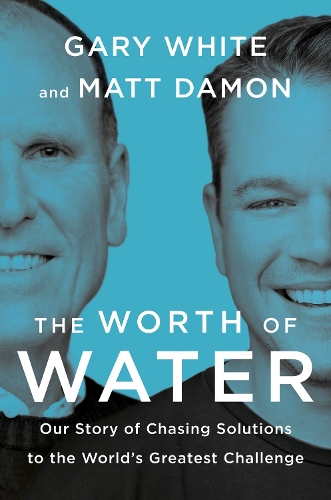
Hey, welcome to this blog post where I review ‘The Worth of Water’ by Gary White and Matt Damon.
Rethinking ‘charity’
The Worth of Water – I wasn’t sure how to really write this review. Was it a book on charity? Philanthropy? A finance book? Perhaps business and creating a new industry? A book on innovation perhaps? This makes it difficult to decide how to write and settle on a theme for this review. However, I can safely acknowledge that you know what it is: a book of all of these themes.
Doing what Matt and Gary and their extraordinary teams at H2O Africa, WaterEquity, WaterPartners and Water.org did was rethink ‘charity’ This created the now commonly used charitable giving term – ‘impact giving’ which required a more thorough and analytical look at microfinance and lending for local communities on the ground.
The Water Crisis
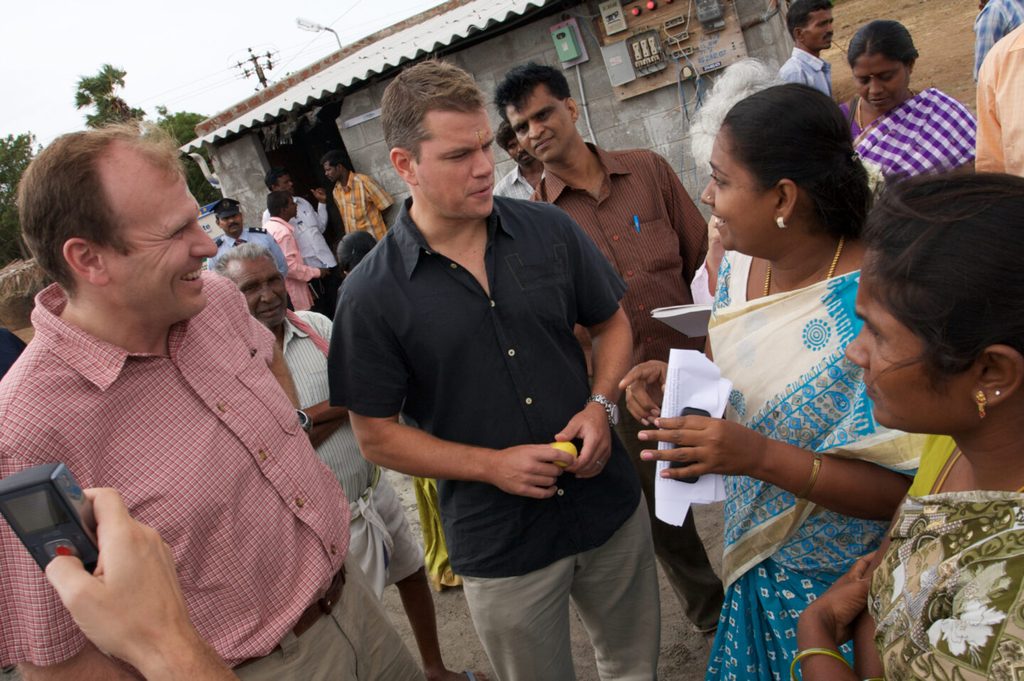
Have you ever not had water? Like just not had it? Not had it to drink, not had it to wash, not had it to shower or not had it to clean yourself after going to the loo? No? Me neither. I’ve never existed at any point where I had to live without it or struggle physically in order to get it.
Yes there have been some occasions here in some parts of the UK where water pipes have burst which have led to a week or so where people have not had water through their taps.This has caused long queues of cars and people waiting for bottles of water that are freely being distributed by the government and water companies.
But imagine this now without the distribution point. No water was available to be collected. Imagine the shelves at Tesco or Sainsbury’s being completely empty of any drinks. Imagine the toilets not working or as has become increasingly common throughout my travels – paid for.
Now multiply this one week or one day to years and decades. Could you work as you do now? Would you have your monthly salary? Could you eat and sleep freely? Could you comfortably send your kids to school?
Some of these questions might sound really stupid or even have poor logic. But this is a similar reality for still millions of people – mostly women and young girls – throughout the developing world.
Water is central to the fight to get more kids in school, too. Illnesses caused by waterborne diseases cause 443 million missed school days each year.[9] The lack of bathrooms and sanitary products keeps girls at home for multiple days each month when they have their menstrual cycles. And of course, the long walks to water cause girls to drop out completely. If you want kids in the classroom, you have to end the water crisis.
White, Gary; Damon, Matt. The Worth of Water: Our Story of Chasing Solutions to the World’s Greatest Challenge (p. 17). Penguin Publishing Group. Kindle Edition.
The term ‘water crisis’ is used by many countries frequently, especially after the global heatwaves of 2026. There’s a crisis in the UK, Canada, Israel and so on. I’m not going to demean any of these impending crises but in the early 2000’s this applied and was used to describe the overwhelming hardship faced by developing communities in Africa, India and the Middle East.
This book which I highly recommend reading is not a book promoting a charitable cause. It’s not a book primarily pitched as a call to action book. Nothing wrong with these by the way. But it does read a lot more like a business book where an unlikely partnership developed to create a really intuitive solution to a problem that most financial institutions never believed in. If you’ve read That Will Never Work and my book review – it overlaps with a lot of lessons and themes here.
Lessons in failure & storytelling
A consistent theme is how often the strategy changed throughout as well as the instances of ‘failure’. But much like Be Useful, failure was never really failure. It just informed the next stage of thinking about how they could move closer to the vision.
…what really impressed me the most, was his comfort level with failure—his willingness to accept it as an inevitable, and indispensable, part of the process. Not something to be spun or explained away, not something to be avoided at all costs, but something that informs your approach and fuels your success.
White, Gary; Damon, Matt. The Worth of Water: Our Story of Chasing Solutions to the World’s Greatest Challenge (pp. 85-86). Penguin Publishing Group. Kindle Edition.
Much like quite a few conglomerates the team behind Water.org is composed of a visionary and an engineer. Matt was in a lot of ways a visionary whereas Gary was more the engineer (he actually was an engineer). This was the same with Apple, Microsoft, and a few of the X companies (you know the ones but I’m just going to group them as X).
A key skill again here is the art of storytelling. This is what Matt seemed to do really well. You kind of had to be, being in the same rooms as Bill Clinton, Bono and Muhammed Yunus (nobel prize winner: 2006).

What made all these skills in my opinion even more pronounced was how they were used to navigate the hesitancy of the financial markets and major banks to invest in microfinance. Microfinance – giving small loans to households and small communities for taps and toilets – was pitched remarkably well as a humanitarian/charitable/business/financial process to alleviate poverty.
This might get a lot of pushback but I still believe market-based solutions have often proven incredibly powerful in lifting communities out of poverty. Whilst Microfinance for water projects wasn’t strictly capitalism in the way of the world today, it still made profound change by incentivising corporations to take a different approach to doing good and empowering communities where traditional projects completed by USAID failed to create lasting change.
A lot of progress had been made but the Water Decade started to dry up which caused funding challenges. In charity there’s often a period of high visibility and donations/funding for a global cause – whether that be water, food, AIDS, Polio etc. There often comes a point however where it’s no longer the trend of the month as donors pivot towards other causes which are just as important.
At the time of writing of the book, Matt & Gary were in the midst of the first lockdown due to the Covid-19 pandemic. This brought existential crises to the charity and the charity sector. Navigating this is detailed thoroughly in the book. Unfortunately it is a consensus amongst the scientific community that this will happen again.
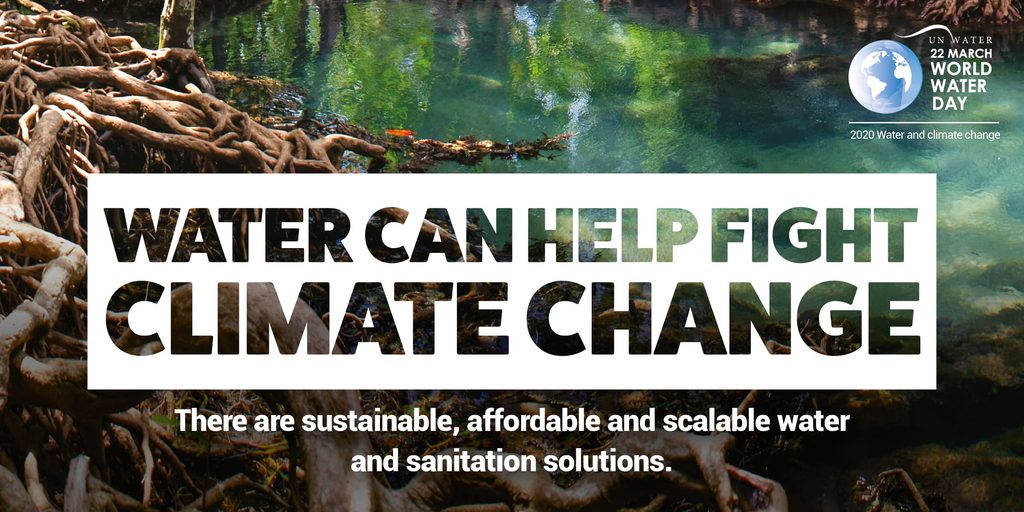
This book traverses through many global issues. From water, sanitation and climate change. It also gives a detailed breakdown of microfinance and the financial markets – something I would more expect from a purely financial business book. This is a book not only on charity/philanthropy and doing good. It delivers this in a powerful way by encompassing the economical and logic behind why this is so important.
You don’t need to donate. I’m not asking you to. But sharing the message and the idea behind it can do just as much good and is another powerful way to help. So I really hope you buy this book and share. And share this post if you found it valuable/informative!
There’s another way to contribute beyond dollars: you can tell the story of the crisis and how we can solve it. Talk about it; write about it; post about it. Some dismiss speaking out online as slacktivism. But telling this story, bringing that awareness to the decisions that people make in their lives—it really does matter. When people see others rising up, some will be moved to rise up, too.
White, Gary; Damon, Matt. The Worth of Water: Our Story of Chasing Solutions to the World’s Greatest Challenge (p. 194). Penguin Publishing Group. Kindle Edition.